The latest sustainable Action: The Slow Fashion Manifesto
Mayors from more than 30 international cities and towns recently came together at ChangeNow, a well-known gathering focused on environmental solutions, to express their concerns about fast fashion's negative impact on their communities and the environment.
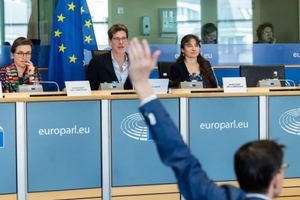
(This picture is from the internet)
Representatives from ten European cities including Dublin, Paris, Strasbourg, Bordeaux, Leuven, Annecy, Bologna, Rzeszow, Terrassa and Turku gathered to support slow fashion on behalf of a population of 6.5 million declaration. The goal of this collaborative initiative is to persuade the European Union, the G7 and the Organization for Economic Co-operation and Development (OECD) to adopt rules that would level the playing field for small fast-fashion businesses and slow-fashion entrepreneurs.
The manifesto had a set out a number of important goals, one of which was to educate the public about the negative social and environmental impacts of fast fashion. By taking advantage of public support to lower rents for slow-fashion actors, also hoped to give them easier access to production and sales locations. The manifesto also focused on creating local jobs and providing financial support for research and innovation in environmental technology solutions.
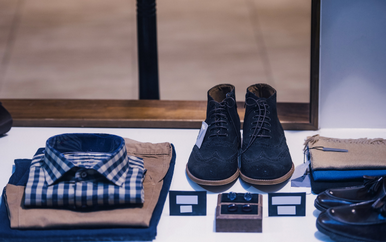
The goals of the manifesto include:
●Raise public awareness of the social and environmental impact of fast fashion while valuing local expertise and craft
● Promote slow fashion into production and sales venues, use public support to help reduce rents for slow fashion actors
● Provide financial support for research and innovation to find technological solutions that are greener and create local jobs
● Provide financial support for new business models in the fashion industry and other businesses in the socio-economic, circular and/or functional economy and reorient financial instruments such as grants and loans to support companies with a positive impact
● Use the vehicle of public procurement to create new markets and customers for these enterprises

“We don't want to wait until more nature and biodiversity are destroyed and then to take action. We don't want to see another "Rana Plaza", or to see those slow-fashion designers and entrepreneurs going out of business. We want to ban super fast-fashion and create rules for fair play so we can make sure the clothes we wear are made by people who love what they do without harming the environment,”
According to a statement from ChangeNow, the textile industry should currently be responsible for severe environmental degradation and human rights violations. The slow-fashion promotion would seeked to address these issues by promoting ethical and just production methods that put environmental sustainability and better working conditions for industry stakeholders at the forefront. The goal of slow fashion is to apply principles of ethics and fairness in the production of clothing while ensuring better working conditions for producers and suppliers within the industry.
The Slow Fashion Manifesto aims to promote strong regulations that drive sustainable fashion industries and textile companies across Europe to respect their workers and the environment at different levels:
In the level of international and Europe:
● Prohibition of unfair trading practices to protect weaker contracting parties committed by brands and retailers, and enforce more ambitious social and environmental provisions in trade agreements
● Support producing countries, including through governance reforms and enhanced law enforcement
● Ban consumption incentives by banning fast-fashion advertising
In the level of the whole Europe:
● Adopt and implement a robust Carbon Boundary Adjustment Mechanism (CBAM) and extend its scope to the textile sector
● The swift adoption of a strong and ambitious corporate sustainability due diligence EU directive, which places real obligations on fast fashion giants to ensure respect for the social and environmental rights of their value chain business partners, as well as equally robust regulations banning products - made with forced Labour - and the adoption of the same at the level of other international organisations
● Ban the use of chemicals in the textile industry and stop delaying the objective of amending the REACH regulation
● Make textiles a pillar of the European Green Deal industrial strategy
● Adopting the European Slow Fashion label allows consumers to understand the provenance and environmental impact of the clothes they buy
In the level of the whole nation and regional area:
●Adopt preferential taxation, adjust financial instruments and use public procurement to support companies with a positive impact

Fast-fashion is an industry term for garments that are usually made within a few months. These brands often have seasonal collections that are available within weeks or months of release. That's why it's called "fast-fashion."
Fast-fashion is often mentioned because it is the current trend in the fashion industry. All of the best-selling garments are made quickly and can be purchased anytime, not just when they're released in season.
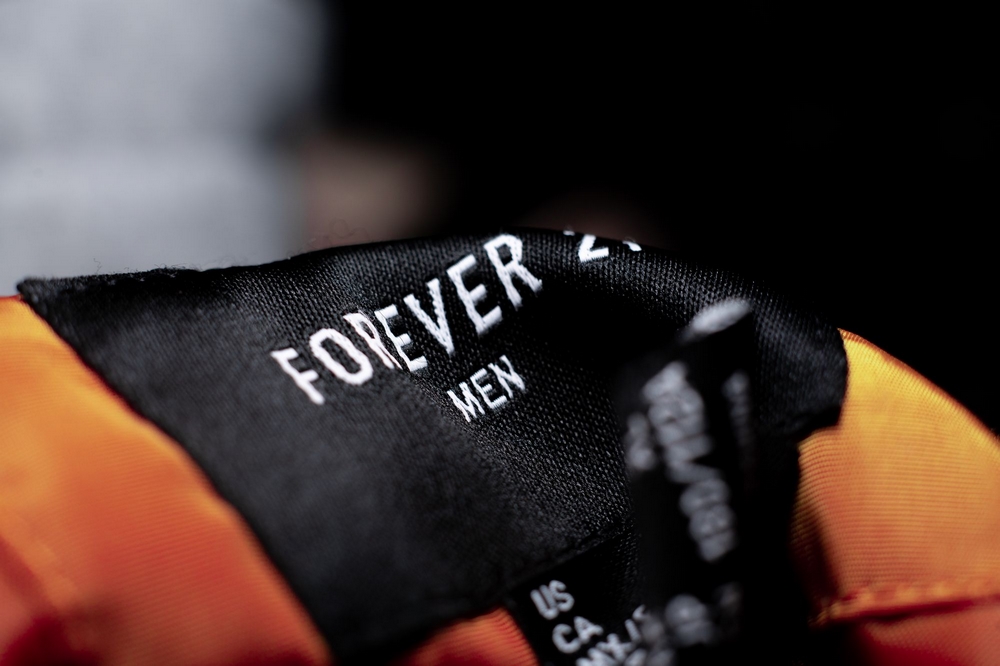
Usually, these fast-made garments tend to be produced in larger than standard quantities, so they can meet different sizes, styles, prices and colors, etc. In this way, fast-fashion is accessible to almost everyone.
However, fast-fashion has been controversial for its production process that damages the environment and exploits cheap labor.
Popular fast fashion brands are like Forever21, Shein, H&M and Zara.

Slow-fashion refers to fashion collections that combine fashion, quality, and consumer storage capacity and can last at least more than one season. Compared with "fast-fashion", slow-fashion also emphasizes the raw materials and production technology of clothing, the speed of new innovations that are more environmentally friendly, and socially responsible working conditions.
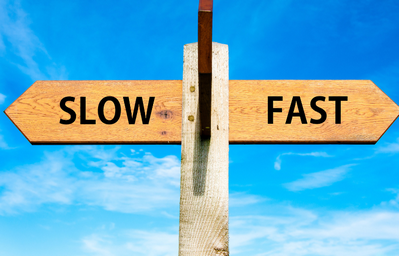
The difference between the two is that, for fast fashion, time is very precious, new products are launched quickly, cheaply and keep up with fashion trends. Slow-fashion can be interpreted as a more rational, but at the same time more expensive, approach that emphasizes permanence, classics and individuality.
Typically, slow-fashion products will use simple designs and use less fabric in the finished product. This helps to make items last longer and use less energy to create.
To keep it simple, the brand will use a single purpose and color design. This helps to keep the slow fashion industry simple so that it can be used consistently by all.

In 1986, Italy launched the “Slow Food Movement” that quickly swept the world. The campaign, which aims to "protect the inalienable right of human beings to enjoy pleasure by protecting delicious food, while resisting the impact of fast food culture and supermarkets on life," calls on people to oppose monotonous standardization and standardized production and advocate personalized and nutritious products. This provides the soil for the birth of "slow-fashion" The promotion of "slow" is a manifestation that people are no longer satisfied with the instant enjoyment brought by mass production, but instead begin to expect and pursue a more meaningful lifestyle. This slow trend subsequently catalyzed a series of similar movements, especially in design.
From the late 1990s to the early 2000s, the fast-fashion industry developed rapidly, replacing traditional high street brands with its cost and speed advantages. Behind the rapid market and affordable prices, the problems are also obvious - globalization has provided cheap labor and low standards of human rights and environmental law, especially resulting in third World sweatshops and environmental pollution hotspots. As journalist Lucy Siegle reminded in her documentary The True Cost: "Fast-fashion is not a free lunch. There are always people, there are always places that are footing the bill." After the problem of fast fashion was exposed, it caused a lot of thinking - what is the price of fashion? How should fashion evolve?

In 2007, fashion theorist Kate Fletcher, inspired by the Slow Food movement, first proposed the concept of "slow-fashion" as opposed to the fast fashion model that had emerged some 20 years earlier. Kate Fletcher founded The Slow Fashion and Sustainable Design Research Center in the UK, and published an article on "Slow-Fashion" in The Ecologist, a globally renowned online magazine on environmental affairs, calling on people to reflect on all aspects of the current fashion industry from the perspective of sustainability and ethics, including design, manufacturing, consumption.
Since then, more and more designers and brands have awakened, and more and more brands advocating “slow fashion” have grown up. Compared with fashion trends, sustainable clothing brands such as Everlane and klee klee care more about excellent clothing quality and simple and durable styles, which can extend the life cycle of clothing and maximize the use in consumers' lives.
There are many forms of slow fashion, including but not limited to the following:
Independent design: Slow fashion encourages independent design and emphasizes individuality and originality. Many slow-fashion brands focus on independent design and promote artistry and handcrafting.
Quality and durability: Slow-fashion brands focus on product quality and durability, pursuing high-end manufacturing processes and materials.
Smart consumption: Slow-fashion advocates consumers to choose products carefully, reduce waste and excessive consumption, and encourage smart consumption.
Sustainable production: Slow-fashion brands adopt sustainable production methods, focus on environmental protection and social responsibility, and minimize the environmental impact in the production and sales process.
Fair trade: Slow-fashion brands support fair trade, pay attention to the protection of labor rights, and encourage consumers to choose socially responsible brands.
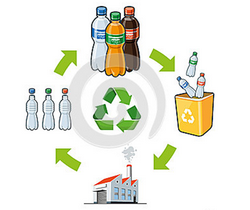
Reduce plastic pollution: Plastic recycling can reduce plastic pollution and reduce the impact on the environment, which is in line with the environmental protection concept advocated by slow fashion.
Promote sustainable development: Plastic recycling can promote sustainable development, reduce resource waste, improve resource utilization, and is in line with the sustainable production methods advocated by slow fashion. In addition, plastic recycling can also provide employment opportunities and promote social and economic development. Therefore, the impact of plastic recycling on slow fashion is positive.
For consumers, "slow fashion" abandons the blind consumption impulse of vanity and desire, and then seeks a more durable and more personal style of dressing concept, and cultivates a self-derived aesthetic awareness and ability. Therefore, the core concept of "slow fashion" is not not to buy, but more about what to buy and how to buy.
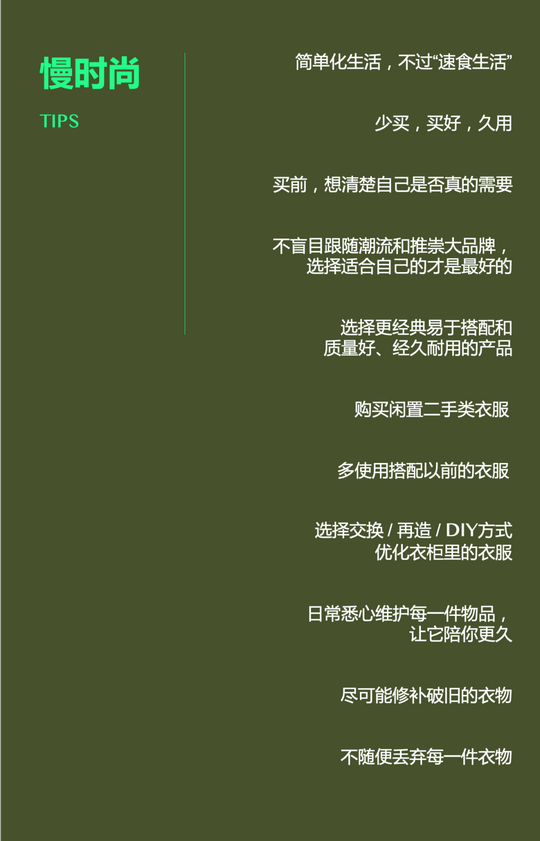
(This picture is from the internet)
The promotion of Slow fashion is in line with the concept of sustainable development, reducing resource waste and improving resource utilization, which is not only in line with the environmental protection concept advocated by Slow fashion, but also conducive to environmental protection.
Due to the presence of large amounts of plastic waste, marine life, from plankton and shellfish to birds, turtles and mammals, are at risk of poisoning, mobility impairment, starvation and suffocation. Corals, mangroves and seagrass beds can also become submerged by plastic waste, leaving them without access to oxygen and light sources.
Marine plastics may become a good source of recycled content, which can not only reduce waterway pollution, but also play a good role in guiding the healthy development of the economy. Improving the recognition of recycled plastics and increasing the market access rate of recyclable plastics contribute to the development of circular economy.
Oceancycle is a community-driven organization working to create solutions to ocean plastic pollution. The Oceancycle Marine Plastics Recycling certification aims to provide more transparency and traceability for Marine plastics, helping manufacturers and brands to make better and more sustainable choices in raw materials, while also enhancing the brand image and enabling more consumers to choose their products.
The purpose of OceanCycle is to clarify the requirements and standards for the recycling of Marine plastics and to ensure that companies follow proper chain of custody procedures during the collection, processing, labeling and transportation of Marine plastics. OCI is used to verify that a manufacturer or company has followed the correct chain of custody procedures when manufacturing certified products for Marine plastic recycling.
Leverage is the only authorized partner of Oceancycle in China and has provided OCI certification to many manufacturers and traders, covering many coastal cities untill now, such as Guangdong, Fujian, Ningbo, Shanghai, Qingdao, Dalian and Taiwan. Leverage is also a certification body of China Certification and Accreditation Administration (CNCA-R-2020-707), inspection and Accreditation Body of China National Accreditation Administration for Conformity Assessment (CNAS IB 0605), a member of the United Nations Global Compact Organization UNGC, and a member of AWS International Sustainable Water Environment Management Organization. We are committed to promoting the sustainable development of business, society and the environment. We will continue to play a role in reducing plastic waste around the world, and our Ocean Cycle certification enables more and more businesses to use safely recycled, quality-assured plastics while promoting a sustainable circular economy.
Recently, in order to implement the relevant provisions of the "Regulations on the Management of Group Standards" and relevant regulations like "Opinions on Promoting the High-quality Development of Group Standards and Norms", it has widely absorbed relevant parties such as production, operation, management, construction, consumption, monitoring and certification to participate in the preparation of group standards of Shanghai Federation of Industrial Economics , giving full play to the advantages of all parties, and comprehensively improving the quality of group standards. Shanghai Federation of Industrial Economy organized the compilation of five group standards and the collection of participating units such as the "Jianghai Plastic recycling Certification Standard", Leverage had also participated as the authorized unit of the standard drafting. The proposal of this certification standard provides more transparency and traceability for ocean plastics, helps manufacturers and brands make better and more sustainable plastic choices, conforms to the global development trend of emission reduction and environmental protection, and contributes to recycling economic development.
If you are interested in drafting the above standards or have any questions about our Oceancycle certification, please contact us.
Leverage is a responsible third party supply chain management services company, It is a member of China National Certification and Accreditation Administration Certification body (CNCA-R-2020-707), China National Accreditation Service for Conformity Assessment Inspection and Accreditation Body (CNAS IB0605), LCA Life cycle Green Management Professional Committee, and is also recognized by many international organizations, such as UNGC, UNEP, AWS, ILO, etc., we provide customers with ISO management system certification, oceancycle marine plastic recycling certification, product carbon footprint accounting, organizational carbon verification, carbon neutral solutions, ESG strategy consulting, ESG report preparation and verification services. We are committed to contributing to the realization of the Sustainable Development Goals through our practices.
ISO management system certification | service certification | product certification | product inspection and testing services | corporate ESG strategy consulting | ESG report preparation | ECOVADIS/SBTI technical support | ESG-related capacity building | AA1000 enterprise sustainable development (EGS) report verification
If you want to know more information, please contact us:
■ Shanghai :
Leverage Limited (Shanghai) Co., Ltd.
Address: Room 402, No 2. Building, No .1328, Hengnan Rd, Shanghai, China
Phone: + 86 21 64067720
Email: cs@leveragelimited.com
■ Hongkong :
Leverage Global Limited
Address: Room 1318-19, Hollywood Plaza, 610 Nathan Road, Mongkok, Kowloon, Hong Kong
我们的资质或实践:
·SAI 批准的 SA8000 认证机构(NO.046)
·中国合格评定国家认可委员会检验鉴定机构CNAS (NO.IB0605)
·国际劳工组织(ILO)SCORE 可持续发展项目许可机构
·中国海关总署批准的检验鉴定机构(No.683)
·HIGG FEM环境项目验证机构(NO.131899)
·公益金融联盟(GSFN)创始发起单位
·UNGC联合国契约组织成员
·CNCA中国国家认证认可监督管理委员会认证机构
·中国出入境检验检疫协会合规工作委员会成员
·浙江省国际贸易协会数字化专业委员会联合发起单位及专家委员
· UNEP LCI 联合国环境规划署生命周期倡议成员
·长三角一带一路国际认证联盟服务机构
·长三角绿色低碳发展行动共同体成员
·全生命周期绿色管理专业委员会成员单位
·中国企业气候行动CCCA成员
·AA1000可持续发展(ESG)报告验证机构
· 科学碳目标倡议(SBTi)成员
· TCFD气候相关财务信息披露工作组支持者
·EPD环境产品声明中国认可机构
·联合国责任投资原则组织(UN PRI)签署机构
·IIAF 国际反舞弊协会成员
·上海市企业法律顾问协会 理事单位
·上海市可持续发展研究会国际标准化专业委员会
·国家“绿色制造体系”第三方评价机构
·零碳工厂评价认证服务机构
·上海市绿色低碳服务机构
·制药供应链负责任倡议PSCI审核机构
·全球电子协会IPC1401 ESG管理体系先学伙伴
·EcoVadis 认可的核心咨询合作伙伴
·中华环保联合会ESG专委会委员单位
·IFRS认可的第三方服务机构
·IAASB认可的第三方服务机构
我们的服务:
Leverage在全球范围内为客户提供站式的解决方案和系列增值服务,包括但不限于如审核、认证、验证、验货、绿色供应链管理、培训、Ecovadis/CDP/NQC-SAQ/SBTi/CSA/MSCI 技术咨询、ILO SCORE 企业可持续发展培训项目、Higg FEM 环境验证项目、服务认证、产品认证、ISO 管理体系认证 (ISO9001 质量管理体系、ISO14001 环境管理体系、ISO45001 职业健康安全管理体系、ISO37001 反贿赂管理体系 、 ISO37301 合规管理体系 、GB/T 39604 社会责任管理体系、ISO20400 可持续采购绩效评估、ISO28000 供应链安全管理体系认证 等) 、 SA8000 社会责任审核 、神秘访客服务、OCI 海洋塑料循环回收认证、定制化可持续发展解决方案和 ESG 报告编制及评级提升、AA1000可持续发展(ESG/TCFD)报告鉴证、ISO14064 和 ISO14067 等温室气体碳盘查、碳足迹、碳管理体系建设、碳中和认证、碳中和路线图披露等相关可持续发展服务。
我们的客户:
我们已经为350多家国内外著名品牌提供了专业服务,其中包括正泰集团、金风科技、华为、晶科能源、瑞可达、中材科技、上下、台达、丰田汽车、奇瑞、晨光、中车、阳光能源、冠捷、臻臣、翔泰、Gildan、The Very Group, The Manufactured Network, ARCO, MuscleSquad, WALMART, GAP, H&M, ZARA, NIKE, ADIDAS, ONLY, PVH, VF, TARGET, Costco, ALDI, DUNELM, ASDA, Coles, JCPenney, COLES, NewLook, B&Q, BAREFOOT, MONSOON, George, Waitrose, RiverIsland, HALFORDS, JohnLewis, Hallmark等。
我们的服务网络:
我们也在包括日本、韩国、越南、柬埔寨、孟加拉、缅甸、马来西亚、印度尼西亚、斯里兰卡、巴基斯坦、美国、英国、意大利等国家设立分公司或代表处,相信能为供应链上游的利益相关方提供更为全面的解决方案。
Related Posts

欢迎联系我们
Leverage上海总部 :
地址:上海市闵行区恒南路1328号2号楼M02室
电话: +86 21 64067720
邮箱:info@leveragelimited.com
业务联系:
Murphy Fei 13917452486
Aron Qu 13917794381
Weber Hu 18817921025
其他事宜联系人:
技术支持: Joyce Gu 13601755765
投诉及建议: Murphy Fei 13917452486
廉政事宜: Aron Qu 13917794381
匿名举报邮箱:
compliance@leveragelimited.com

【关注公众号】
Our Partners