Leverage was invited to attend the 2023· Caixin Society Enterprise ESG Forum - Corporate ESG Forum: Integrating ESG principles into a company's own products or services helps achieve sustainable devel
With the growing focus on sustainable development in society, ESG has become an important reference for evaluating capital markets, investors, and corporate decision-makers.
The 28th Conference of the Parties (COP28) to the United Nations Framework Convention on Climate Change (UNFCCC), which recently concluded, reached the "UAE Consensus" on a range of issues, including the first global stocktake of the Paris Agreement, mitigation, adaptation, finance, loss and damage, and just transition. This fully demonstrates that in the face of the various risks and challenges brought about by climate change, the only viable path forward is a green, low-carbon development approach, accompanied by strong internal governance and a sense of social responsibility. Only then can businesses achieve sustainable and long-term growth.
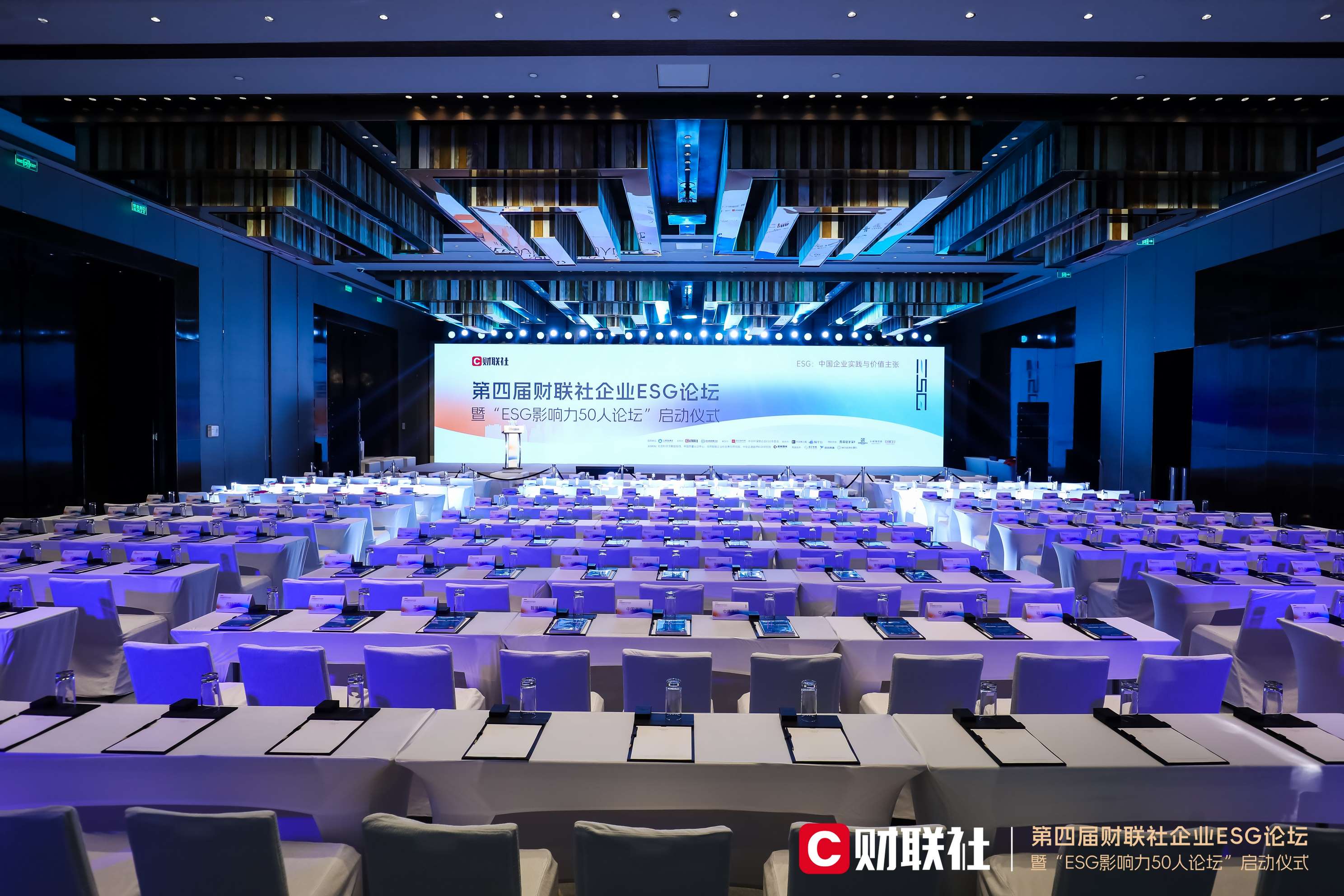
On December 27, 2023, the 2023 Caixin Society Enterprise ESG Forum and the “ESG Influence 50 Forum" Launch Ceremony were held in Beijing. The event was hosted by the Financial Association and the China Environmental Protection Federation, with the Financial Association Political and Economic Research Institute and the ESG Committee of the China Environmental Protection Federation as the organizers. At the same time, the first domestic ESG Blue Paper, China's Corporate Environmental, Social, and Governance Report (2023), was also released at the event.
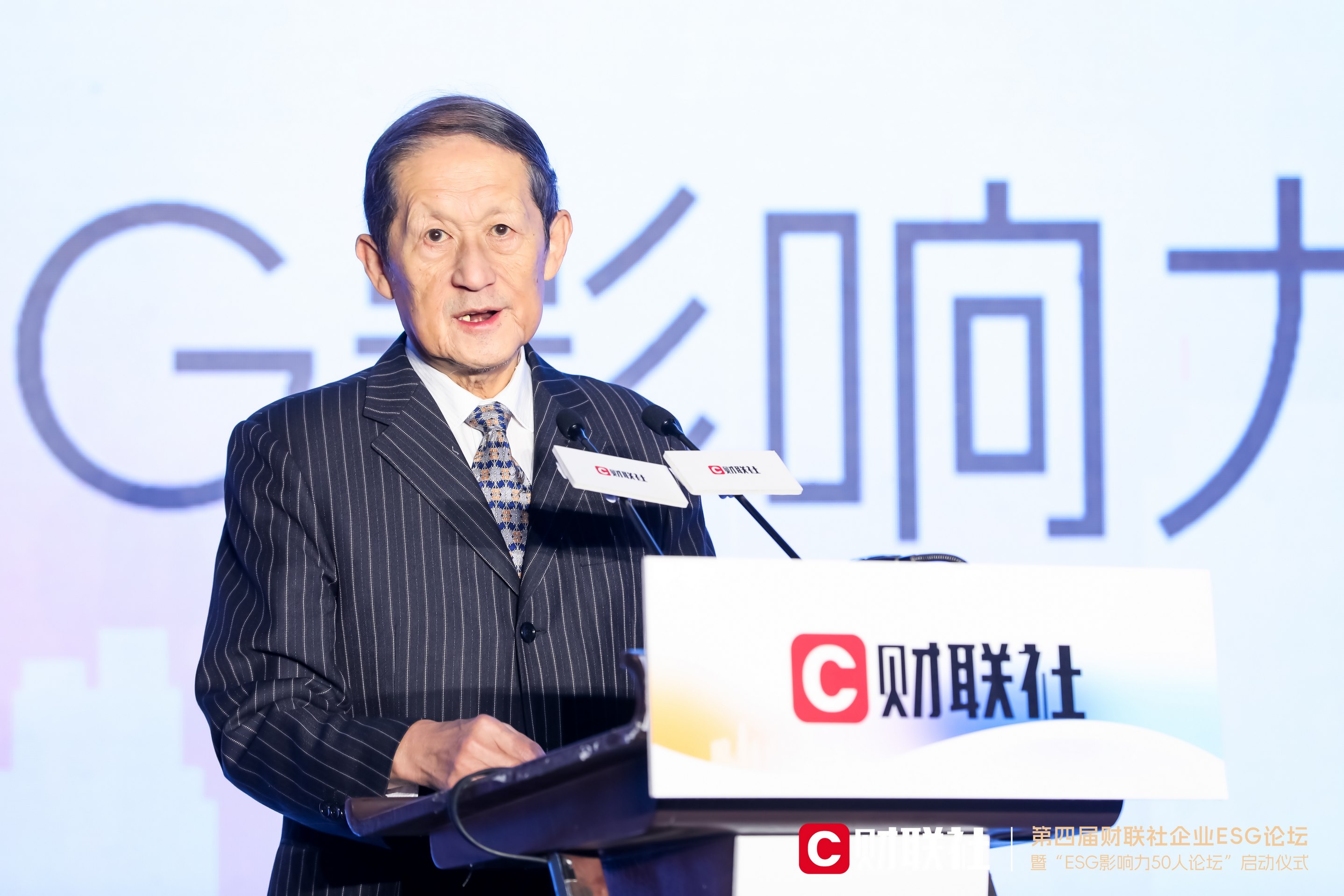
In his speech, Sun Xiaohua, Chairman of the China Environmental Protection Federation and former Vice Chairman of the All-China Federation of Industry and Commerce, pointed out the importance of guiding businesses to truly understand the urgency and necessity of implementing ESG standards. ESG is a reflection of a company's international perspective on sustainable development. It serves as a passport for businesses to step onto the global stage and is also a test for companies to demonstrate their new role and contributions in China's new era, new journey, and new landscape. At the same time, he emphasized the importance of presenting the story of Chinese-style modern ESG from a global perspective. He suggested that we should align with the "six commitments" outlined in the report of the 20th Party Congress, focusing on a people-centered approach, confidence and independence, integrity and innovation, a systematic mindset, problem-solving orientation, and a global outlook. This would help highlight new heights and fresh ideas.
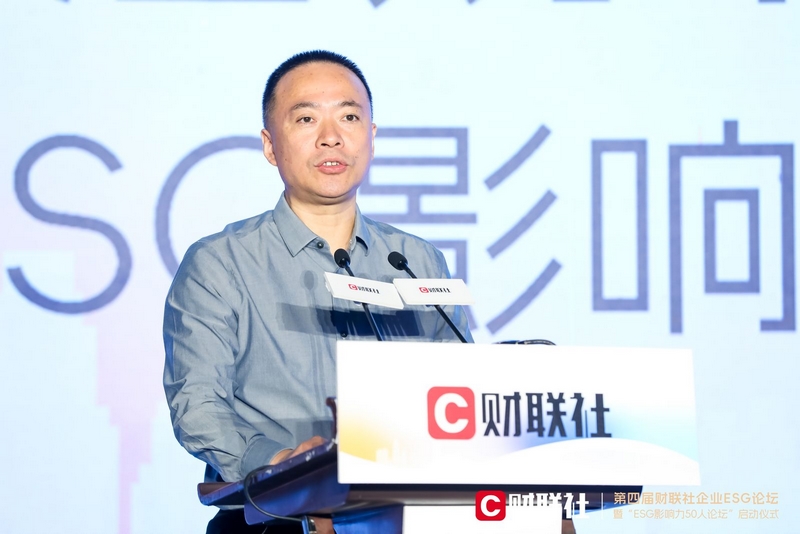
In his speech, Yang Daquan, Vice President and Editor-in-Chief of Caixin, highlighted the significance of ESG, noting that companies have shifted from focusing solely on economic gains to simultaneously prioritizing social responsibility, corporate governance, and environmental protection. He emphasized that ESG indicators can serve as key metrics for sustainable development, helping to better guide the future strategic planning and growth of enterprises.
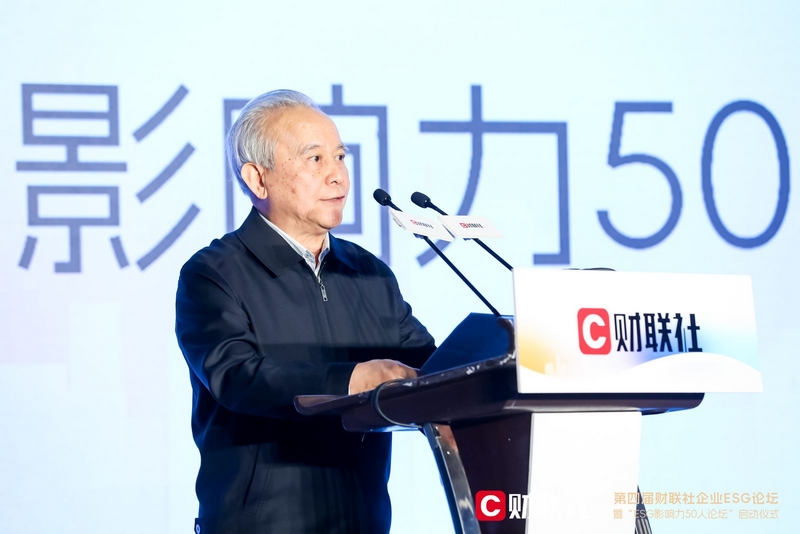
Wang Qinmin, vice chairman of the 12th National Committee of the Chinese People's Political Consultative Conference and former chairman of the All-China Federation of Industry and Commerce, pointed out in his speech that he hopes to accelerate the implementation of the digital development of corporate governance system through the concept and evaluation and evaluation system of ESG, and then promote the high-quality development of the overall economy and society.
He suggested that, first, we should focus on the sustainable development of enterprises, adhere to policy guidance, and increase support for green and low-carbon development as well as technological innovation. ESG can be integrated into the evaluation of scientific and technological achievements to assess the organization’s innovative products and their data, thus fostering the development of new technologies, products, business models, and industries.
Second, he proposed promoting the upgrading of enterprises, with a particular emphasis on accelerating the digital transformation of traditional industries and fostering the rapid growth of emerging sectors.
Third, he emphasized the importance of encouraging and supporting enterprises in their efforts to drive green, low-carbon technological innovation, improve corporate governance, and train professionals in sustainable development. He also highlighted the need to strengthen international exchanges and cooperation, and to cultivate a group of scientists and engineers with a global perspective.

"5, 4, 3, 2, 1, launch!" As the countdown drew to a close, the "ESG Influence 50 Forum" was officially launched. Sun Xiaohua, Chairman of the China Environmental Protection Federation and former Vice Chairman of the All-China Federation of Industry and Commerce, Dong Zhanfeng, Director of the Institute of Environmental Management and Policy Research at the Ministry of Ecology and Environment's Environmental Planning Institute, Yu Xinli, Head of the Administrative Department of the Research Division at CITIC Securities, and Hu Gang, Executive Vice President of Caixin Media jointly took the stage to light the lights for the launch ceremony.
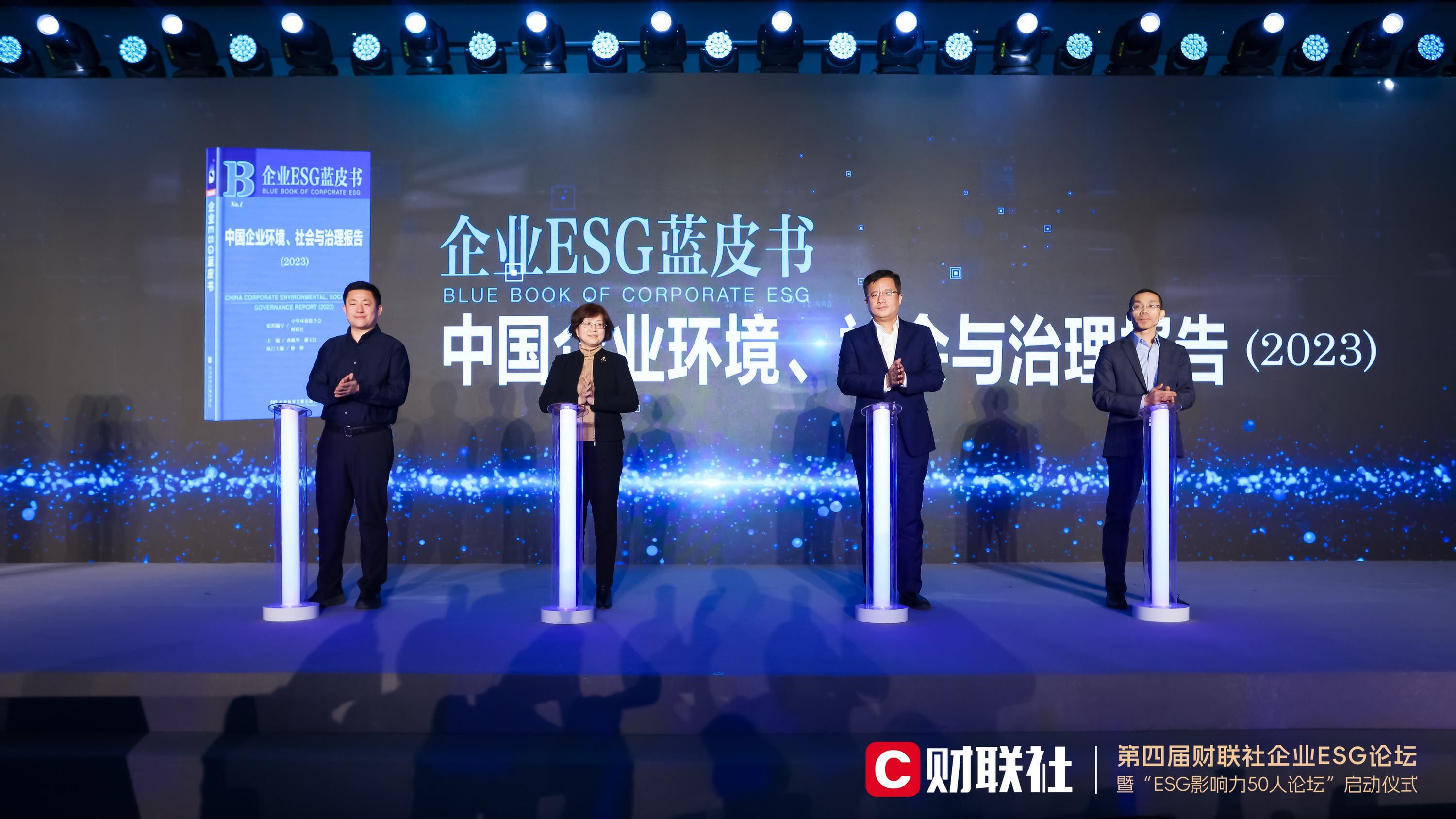
To better discuss and showcase the development of environmental, social, and governance (ESG) practices in Chinese enterprises, the first Corporate ESG Blue Book in China, titled China's Corporate Environmental, Social, and Governance Report (2023) (hereinafter referred to as the Blue Book), was officially released at this forum. The Blue Book was compiled by Caixin Media and the China Environmental Protection Federation.
Xie Yuhong, Vice Chairman and Secretary-General of the China Environmental Protection Federation, Xie Zhaoxu, Party Secretary and Director of the China Quality Certification Center, Jia Baolong, Vice President of Caixin Media, and Cai Jihui, Deputy Editor-in-Chief of Social Sciences Academic Press, jointly unveiled the China's Corporate Environmental, Social, and Development Report (2023) ESG Blue Book.
Lin Bin, the Chairman of the ESG Special Committee of the China Environmental Protection Federation and the Director of the Zhong'an Zhengdao Institute of Natural Sciences, delivered a speech at the release of the Blue Paper. He pointed out that in the future, the development of ESG (Environmental, Social, and Governance) in Chinese enterprises should focus on five aspects:
1. Enhancing the awareness of the importance of ESG,
2. Promoting information disclosure in a continuous and gradual manner,
3. Leveraging the transmission role of market mechanisms,
4. Strengthening policy incentives and support,
5. Advancing the standardization and professional development of ESG.
To better highlight the exemplary role of ESG, the Blue Book has selected 10 companies that are innovative, representative, and exemplary in their ESG practices. These companies have established robust ESG systems and achieved outstanding results. By summarizing their experiences, the aim is to create a model that showcases best practices and fully leverages the leadership role of these enterprises.
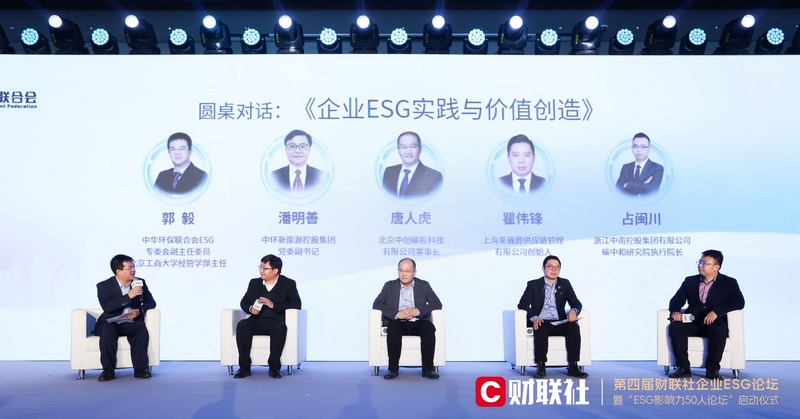
The theme of this roundtable discussion is "Corporate ESG Practices and Value Creation." ESG is the future global trend for business development. It is not only a new trade requirement, but more importantly, a new business model — a novel paradigm for achieving harmonious development between individuals, businesses, society, and even nature. Therefore, in the future, all enterprises must actively respond to this shift.
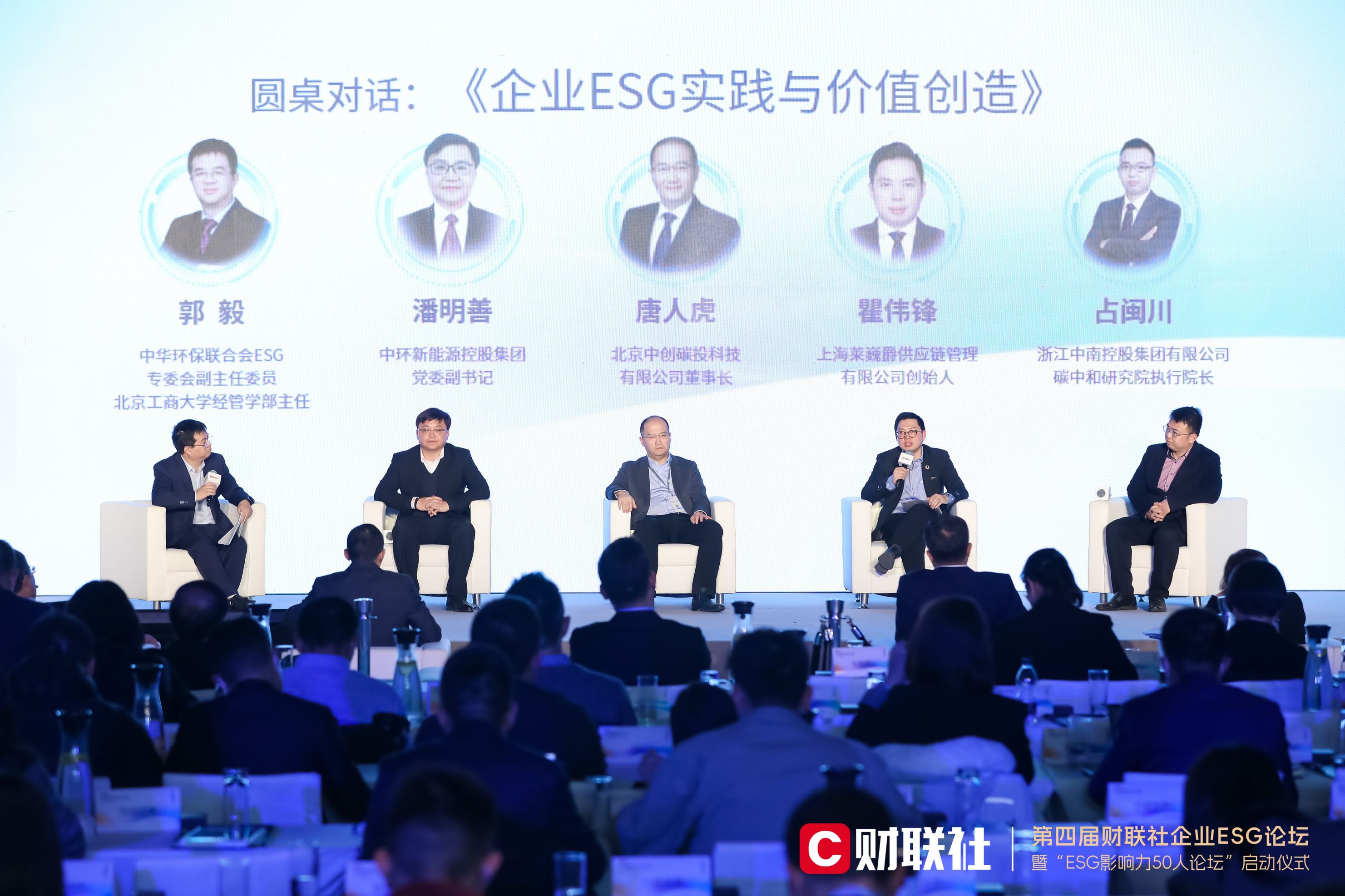
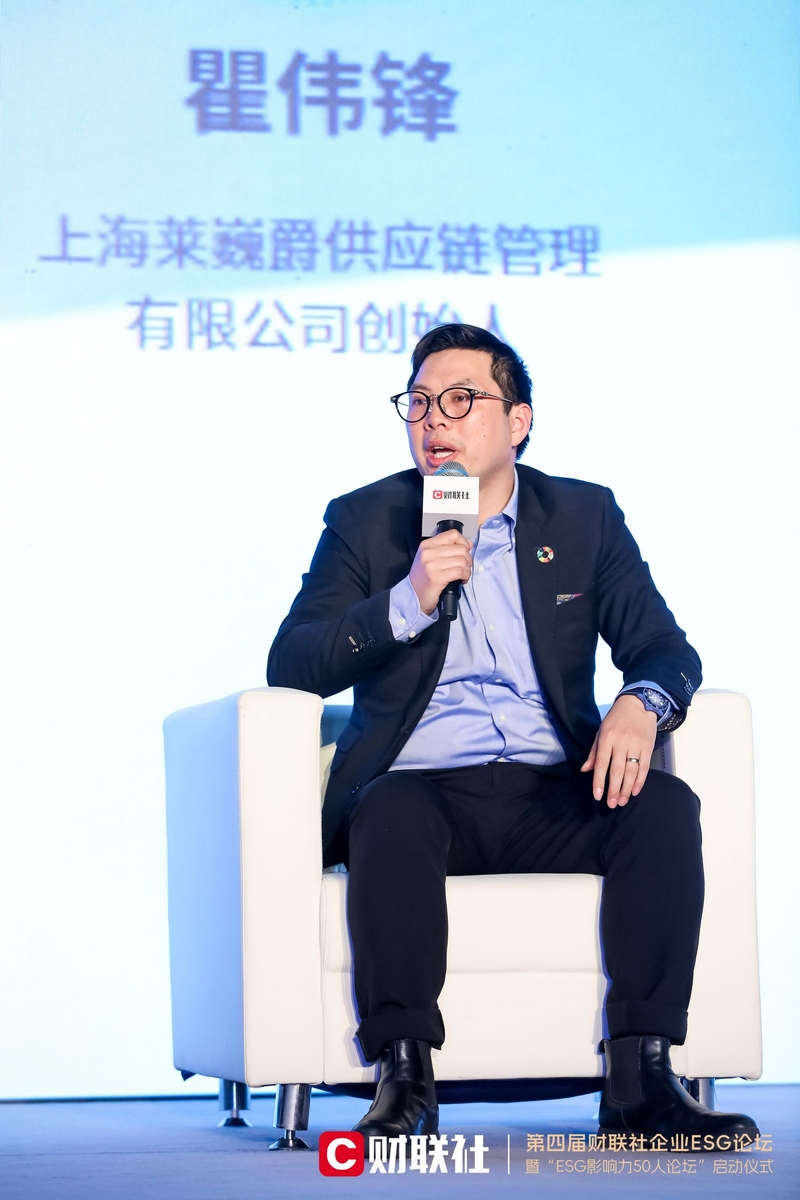
This time Mr. Qu participated in the discussion as an expert member of the ESG Professional Committee of the All-China Environmental Protection Federation's think tank. The host raised four questions, which were answered by the four guest speakers, each drawing on their own practical experiences. Below is Mr. Qu's contribution to the discussion:
Hello everyone, I am Qu Weifeng from Leverage. It is an honor to participate in this sharing session today as a member of the ESG Special Committee of the China Environmental Protection Federation. Leverage is a company focused on promoting sustainability in the supply chain, helping enterprises achieve compliance, ESG goals, and dual-carbon objectives. The founding inspiration for Leverage came from my first job at an international retailer's procurement center. There, I noticed that professional services related to the supply chain, such as testing, training, certification, auditing, and inspection, were monopolized by century-old foreign institutions.
I have worked with brands, importers, and consulting firms, and in 2014, my partners and I founded Leverage. Since then, we have joined various international and domestic organizations, including the UNGC, UNEP, TCFD, PRI, CCCA, CNAS, CNCA, and SAI. We have provided sustainable business services to over 350 international brands and retailers.
The term "Leverage" in English refers to levers, which represents our effort to break the foreign monopoly through our services. It also signifies influence, as we aim to drive the sustainable development of industries and supply chains in China through our work. This is something we have been striving for.
On one hand, through our own practices, we have joined various international organizations such as the UNGC and ILO, signed the "Ten Principles" and, as one of the 30 Chinese entrepreneur representatives, signed the "Rebuilding Global Cooperation Statement." Since 2021, we have continuously published our company's "ESG Sustainable Development Report" and "Carbon Neutral Roadmap Action Report." We have also led or participated in more than 10 national and industry standards related to sustainable development. We became the first organization in the global TIC industry to have its science-based carbon management targets approved by SBTi.
We have improved our organizational structure by establishing a sustainability management team and working groups led by top management, while also strengthening our operational practices. As a result, we have received various recognitions, including the For Good Award, Shanghai British Chamber of Commerce ESG Leader Award nomination, and the First Financial ESG Innovation Practice Award.
On the other hand, we integrate sustainable development into our services and use our influence to encourage more companies to embrace sustainability. As a sustainability-driven business organization, we provide services such as research, training, consulting, rating enhancement, auditing, verification, carbon footprinting, and carbon neutral certifications in the fields of corporate social responsibility, responsible supply chain management, ESG, and dual-carbon goals.
For us, ESG has already been deeply embedded into our operations and customer services, driving our strategic direction and decision-making, while also generating significant commercial value.
As a professional with over 15 years of experience in the development of China's trade, I am honored to analyze this issue and to encourage the industry to pay closer attention to the impact of ESG (Environmental, Social, and Governance) factors on China's supply chain.
Before ESG became a focus, the industry largely discussed CSR (Corporate Social Responsibility), which had a more ethical focus.
In the 1990s, as international trade and manufacturing became more specialized, European and American brands began outsourcing production to China and other Asia-Pacific countries. In the process, issues like child labor, forced labor, and unsafe working conditions surfaced. This prompted NGOs and the media to expose and criticize the unethical practices of brands and retailers. In response, many brands and retailers began establishing procurement codes of conduct, setting requirements such as prohibiting child labor, coercion, discrimination, and poor working environments. I refer to this as the "1.0 era" of sustainable supply chains.
During this period, our industry started to develop services like ethical audits, social responsibility audits, and responsible procurement audits.
In the late 20th century, brands and buyers from Europe, the UK, the US, and other countries began to form regional and industry-specific organizations, creating unified codes of conduct and rules to oversee their suppliers and share evaluation results. Organizations such as WRAP, RBA, and ICTI in the US, BSCI/Amfori in Europe, and Sedex in the UK are examples of such initiatives. I call this the "2.0 era" of sustainable supply chains—an era where business-led rules took shape.
Twenty years later, international organizations and national governments started introducing legislation and directives. Examples include the United States' "Uyghur Forced Labor Prevention Act" (UFLPA), the United Kingdom's "Modern Slavery Act", Australia's "Anti-Modern Slavery Act", Canada's "Combating Supply Chain Forced Labor and Child Labor Act", Germany's "Supply Chain Enterprise Due Diligence Act", Mexico's "Decision on the Management of Imported Products", the European Union's "Corporate Sustainability Due Diligence Directive" and its "Draft Regulation on the Prohibition of Forced Labor Products in the EU Market", along with initiatives like CBAM.
This marks what I consider the "3.0 era" of sustainable supply chains—transitioning from voluntary business practices to mandatory legal requirements.
China, as the largest market with the most comprehensive global supply chain, is continually "evaluated" by foreign brands and retailers. Data on products, operations, labor practices, and environmental impacts from Chinese export-oriented enterprises are often in the hands of European and American companies. From one perspective, this raises concerns about trade security and national trade standing.
From a purely commercial standpoint, the challenge now faced by export-oriented enterprises is not about whether they want to cooperate with a particular customer but that they must comply with market entry requirements. These responsibility management standards have become regulatory obligations, laws, and formal bills.
Companies must face these challenges head-on. They need to address requirements from both internal and supply chain perspectives, using the three ESG dimensions to identify their shortcomings and actively work to improve, ensuring they remain competitive.
From an opportunity perspective, I can confidently say that after nearly 30 years of development, Chinese export-oriented enterprises have already implemented many positive practices in labor rights, health and safety, and environmental protection. Now is the time to strengthen corporate governance and manage dual carbon goals through ESG frameworks. The shift from passive to active management is critical, and it’s an ideal moment for businesses to transform their operations for sustainability. This is a prime opportunity to pursue high-quality and green development.
I have great confidence in Chinese enterprises and look forward to collaborating with domestic companies to face challenges together and advance sustainable development for all.
As a professional organization dedicated to sustainable business, our mission has always been to help "Made in China" companies seamlessly and responsibly integrate into the global supply chain with confidence.
One of my key hopes is that Chinese brands and retailers can quickly adopt the concept of sustainable development and enhance their governance and operational systems through the use of ESG (Environmental, Social, and Governance) tools.
On one hand, as a "chain leader" enterprise, our responsibility extends beyond optimizing our own operations. We also have an obligation to lead by example in promoting good governance within the supply chain. This means influencing and encouraging suppliers to improve in critical areas such as environmental protection, labor rights, business ethics, and carbon neutrality. By doing so, we not only mitigate risks in our own supply chain but also help these leading enterprises strengthen their brand image and, ultimately, boost their international competitiveness.
On the other hand, as representatives of Chinese enterprises, we must not only focus on our own development but also work proactively to enhance China's position in international trade. This involves:
Actively participating in the formulation of international trade rules, initiatives, and standards.
Uniting our forces to confront the challenges posed by international trade barriers.
Facing our shortcomings with humility, learning from others, and standing on the shoulders of our predecessors.
With confidence and responsibility, we must ask: Who else but us can rise to this challenge
It’s important to recognize that the right to influence or the status in international trade has never been granted through concession or appeasement. The evolving laws, regulations, and initiatives emerging in Europe and the United States are primarily aimed at safeguarding their own competitive advantages. This is why it is crucial for China to step up and assert its position.
At the recently concluded COP28, China's climate envoy, Xie Zhenhua, remarked:
"Environmental protection and addressing the climate crisis is a noble cause that will benefit future generations. Everyone should support this effort. Trade barriers should not be erected, nor should restrictive measures be introduced. At the same time, we advocate for fair trade and oppose unilateralism and trade protectionism."
In this context, I would like to conclude with a quote from the General Secretary’s speech at the 20th National Congress:
"At present, the great rejuvenation of the Chinese nation has entered a critical period, and the risks and challenges it faces have also increased significantly. It is unrealistic to expect peace without conflict. We must abandon illusions, embrace the struggle, never compromise on matters of principle, and safeguard national sovereignty, security, and development interests with unprecedented determination and willpower."
Let us all work together, with unwavering resolve, to drive forward China’s sustainable development and global competitiveness in the face of these challenges.
If you want to know more information, please contact us:
■ Shanghai :
Leverage Limited (Shanghai) Co., Ltd.
Address: Room 402, No 2. Building, No .1328, Hengnan Rd, Shanghai, China
Phone: + 86 21 64067720
Email: info@leveragelimited.com
■ Hongkong :
Leverage Global Limited
Address: Room 1318-19, Hollywood Plaza, 610 Nathan Road, Mongkok, Kowloon, Hong Kong


【Contact Us】
Tel:
+86 21 64067720
Email: info@leveragelimited.com
Related Posts



Our Partners